Adherence to these policies, regulations and industry best practices ensures that Daniel Stiel Photography and its team members operates drone missions in a legally compliant, safe, and professional manner at all times.
1. Policy Statement
Daniel Stiel Photography is committed to the safe, legal and responsible operation of Unmanned Aircraft Systems (UAS), commonly known as drones, for all aerial photography, cinematography and UAS services provided to its clients.
Our primary goal is to ensure the safety of the public, our crew, and all property during every flight. This policy outlines the procedures and responsibilities for all UAS operations conducted by Daniel Stiel Photography.
All personnel involved in UAS operations are required to adhere to this safety plan and all applicable local, state, and federal regulations, including those set forth by the Federal Aviation Administration (FAA).
2. Responsibility Roles (varies by mission requirements)
Chief Pilot (Daniel Stiel):
- Ultimate Authority: The Chief Pilot holds the final authority on all flight decisions.
- Policy Management: Responsible for the creation, maintenance, and enforcement of this safety plan.
- Training & Certification: Ensures all pilots and crew members are properly trained, certified, and compliant with all FAA regulations conducted under the Small UAS Rule (14 CFR part 107).
- Pre-Flight Authorization: Approves all flight plans and missions.
- Holds Applicable Licenses, Permits, Insurance, Waivers and Authorizations: Includes but not limited to FAA Part 107 certifications, LAANC authorizations, FAA waivers, business licenses, filming permits, and others as required.
Operations and Technical Support Manager (OTS):
- Equipment Maintenance: Responsible for the routine maintenance, repair, and overall safe condition of all drone hardware, batteries, supplies and ground equipment.
- Software & Firmware: Ensures all UAS and controller software, as well as firmware, are up to date and functioning correctly.
- Pre-Flight Prep: Confirms that all equipment is charged, calibrated, and ready for flight operations.
- Technical Troubleshooting: Provides technical support during operations to resolve any equipment or software issues.
- Safety Audits: Conducts periodic audits of all equipment to ensure compliance with safety standards and manufacturer guidelines.
Remote Pilot in Command (PIC):
- On-site Responsibility: Has direct responsibility for the safety of the flight operation.
- Right to Abort: The Remote Pilot in Command has the final on-site authority to suspend or terminate a flight mission at any time if they determine that continuing the operation poses an unacceptable risk to people, property, or the aircraft.”
- Pre-Flight Checks: Conducts and documents all pre-flight inspections of the drone and equipment.
- Situational Awareness: Maintains visual line of sight (VLOS) with the drone at all times and monitors the surrounding environment for potential hazards.
- Crew Briefing: Briefs all crew members on the flight plan, safety procedures, and emergency protocols.
Visual Observer (VO):
- Assistance to PIC: Assists the PIC in maintaining VLOS and observing for potential hazards, including other aircraft, people, and obstacles.
- Communication: Communicates real-time information to the PIC regarding the drone’s position and any potential risks.
- Public Interaction: Manages and communicates with non-participants to ensure their safety and awareness of the operation.
Pilot & Crew Health and Fitness:
- Fit-for-Duty: All pilots and crew members are required to be in a fit-for-duty condition. This includes being well-rested and free from fatigue, substances including drugs and alcohol, illness or medical condition that could impair their ability to safely participate in and support the mission and drone operations.
3. Operating Safety Procedures
A. Pre-Flight Procedures:
- Risk Assessment: A thorough risk assessment will be conducted for each mission, considering the location, time of day, airspace restrictions, weather, and potential hazards (e.g., power lines, trees, people, air traffic).
- Airspace Assessment/Approvals: Review applicable UAS Facility Maps, airspace/airport alerts, and NOTAMs to determine airspace restrictions, limits and considerations. When applicable, obtain LAANC authorization or further coordination with Air Traffic Management (ATM) as required.
- Flight Plan: A detailed flight plan will be created for each mission, outlining the flight path, altitude, and purpose.
- Site Survey: The crew will conduct an on-site survey to identify safe takeoff/landing zones and potential risks to non-participants, structures, and properties close in proximity.
- Weather Check: The crew will check current and forecasted weather conditions, including wind speed, precipitation, and visibility.
- Equipment Check: All drones, batteries, controllers, propellers, and cameras will undergo a thorough pre-flight inspection to ensure they are up-to-date, in good working order, and flight-ready.
B. During Flight Procedures:
- Visual Line of Sight (VLOS): Maintaining VLOS means the pilot or visual observer can see the drone with their own eyes (without the aid of binoculars or a telescope) at all times during the flight.
- The Remote Pilot in Command and/or Visual Observer will maintain VLOS with the drone at all times. Operations beyond VLOS are strictly prohibited.
- Altitude & Airspace: Flights will not exceed the FAA’s maximum altitude limit allowed in the flight operations area and will be conducted in compliance with all airspace regulations.
- Separation from Public: A safe, legal distance will be maintained from all non-participants, structures, and vehicles.
- Controlled Environment: The flight area will be cordoned off or clearly marked to alert the public of the drone operation.
- Flight at Low Traffic Times: For properties in high-traffic areas, operations will be scheduled for a set time (e.g., early morning, weekends) when traffic flow is low to minimize risk to the public and property.
C. Operations During Limited Visibility:
- No-Go Conditions: Drone operations will not be conducted during periods of low visibility, such as fog, heavy rain, or snow.
- Flight Visibility Requirements
- Minimum Visibility: at least 3 statute miles of visibility
- Observation Point: This visibility is measured from the remote pilot in command’s control station.
- Cloud Clearance Requirements
- 500 Feet Below: The drone must stay a minimum of 500 feet below any clouds.
- 2,000 Feet Horizontally: The drone must also be a minimum of 2,000 feet horizontally from any clouds.
- Flight Visibility Requirements
- Civil Twilight & Night Operations: This requirement is in accordance with the FAA’s updated Part 107 rules for night operations. All civil twilight and night operations must be complaint to current FAA regulations and requirements, including but not limited to aircraft has lighted anti-collision lighting visible for at least 3 statute miles that has a flash rate the FAA considers sufficient to avoid a collision.
- The remote pilot in command may reduce the intensity of, but may not extinguish, the anti-collision lighting if he or she determines that, because of operating conditions, it would be in the interest of safety to do so.
4. Prohibited Use
- Reckless Operation: Operating a drone in a careless or reckless manner that endangers people or property is strictly prohibited.
- Operations Over Crowds: Flights over crowds of people are strictly prohibited. If a crowd forms unexpectedly, the drone will be landed immediately.
- Flying Under the Influence: No personnel will operate a drone while under the influence of alcohol or drugs.
- Illegal Activities: Daniel Stiel Photography strictly prohibits any illegal activity. All individuals covered by this policy are responsible for understanding and complying with the laws and regulations that govern their job functions. No employee is authorized to direct or approve any illegal or unethical act.
- Tampering: Tampering with the drone’s hardware or software in a way that bypasses safety features is prohibited.
- Non-Mission Flights: Using company drones for personal or non-company-related activities is not permitted.
- Beyond Visual Line of Sight (BVLOS): BVLOS operations are not authorized.
5. Procedures for Deviation
Any deviation from this safety plan or a planned flight mission requires immediate communication and approval from the Chief Pilot. The PIC must document the reason for the deviation and the corrective actions taken. If a deviation poses a risk to safety, the flight must be aborted immediately.
6. Accident Reporting
In the event of an accident or incident involving a drone, the following steps will be taken:
- Immediate Action: The PIC will land the drone in the safest possible manner.
- Secure the Scene: The PIC will secure the drone and any damaged property.
- Notify Authorities: The PIC will immediately contact the Chief Pilot and, if required by law (e.g., serious injury, property damage over $500), the FAA and local law enforcement.
- Documentation: A detailed accident report will be completed within 24 hours, including a description of the event, contributing factors, and any injuries or damage.
7. Data Collection & Retention
- Purpose: All imagery and data collected are for the sole purpose of fulfilling client contracts for commercial property photography.
- Sensitive Areas: Due to the nature of commercial properties, there may be instances where a sensitive area (e.g., a competitor’s property, people unrelated to the mission, a residential area) is inadvertently captured. The PIC and editing team will take great care to avoid this and will not be shared inappropriately with clients and will delete any inadvertently captured sensitive imagery in a timely manner.
- Residual Imagery: Residual imagery and data not required for the final client deliverable may be securely deleted from all storage devices within 30 days of project completion.
- Data Security: All sensitive and confidential data will be stored on password-protected, encrypted devices to prevent unauthorized access. The equipment being used, including the drone’s internal storage and memory cards, will be secured with best practices to prevent unauthorized access or data breaches.
8. Insurance Requirements
Daniel Stiel Photography carries and maintains a comprehensive business liability insurance policy that specifically covers Unmanned Aircraft System (UAS) operations. This policy must have a minimum limit of at least one million dollars ($1,000,000) per occurrence to cover potential claims related to bodily injury, property damage, and personal injury arising from drone flights.
A. Policy Coverage:
- The policy must explicitly state coverage for commercial UAS/drone operations.
- Coverage should include third-party bodily injury and property damage.
- The policy should also provide coverage for personal injury claims, which may include unintentional privacy violations.
B. Proof of Insurance:
- A Certificate of Insurance (COI) will be maintained on file and readily available for all clients who require proof of insurance.
- Clients and property owners can be named as an “Additional Insured” on the policy when required by contract, at no additional cost to them. This ensures they are also protected under our policy for the duration of the project.
C. Maintenance of Policy:
- The Chief Pilot is responsible for ensuring the insurance policy remains active and up-to-date.
- The policy will be reviewed annually to confirm adequate coverage limits and to ensure all operations are covered under the current policy terms.
- Any changes to the company’s drone fleet or operational scope will be communicated to the insurance provider to update the policy as needed.
9. Penalties for Misuse
Any violation of this safety plan may result in disciplinary action, up to and including immediate termination of employment. The company will not be liable for any fines or legal action incurred by an individual for misuse of company equipment or non-compliance with FAA regulations. Violations will also be reported to the appropriate regulatory agencies, as required by law.
10. Sources and Regulations
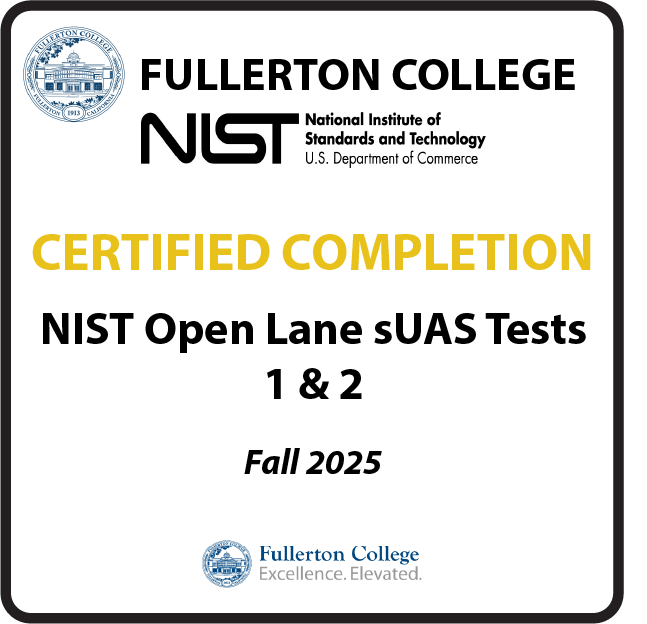
This drone safety plan has been developed by Daniel Stiel, a FAA Part 107-certificated drone pilot since 2020 who earned the “Uncrewed Aerial Systems Piloting Certificate” and various NIST certifications from the Fullerton Drone Lab, a comprehensive drone technology and pilot training program at Fullerton College in Southern California. Daniel also earned the Bachelor of Science degree from the University of Southern California’s School of Business.
Daniel used information from and in accordance with the following federal regulations, industry best practices, and resources, including:
- Federal Aviation Administration (FAA) Regulations: The core of this safety plan is based on the FAA’s Small UAS Rule (14 CFR part 107) for small Unmanned Aircraft Systems. These regulations govern all commercial drone operations conducted by Daniel Stiel Photography in the United States and cover topics such as:
- Pilot certification requirements (Remote Pilot Certificate).
- Operational limitations (e.g., maximum altitude, visual line of sight).
- Airspace authorizations.
- Accident reporting.
- More complex operations outside of the scope of photography and cinematography drone operations typically conducted by Daniel Stiel Photography may need additional certification or approval.
- FAA Remote Pilot – Small Unmanned Aircraft Systems Study Guide: This official FAA document provides comprehensive guidance on the knowledge areas required for the Part 107 exam, informing the training and operational procedures outlined in this plan.
- Drone Industry Best Practices: This plan incorporates best practices from leading organizations in the UAS industry, focusing on risk mitigation, crew resource management, and ethical data handling.
- Insurance Industry Standards: The insurance requirements section is based on standard practices for businesses operating in high-liability fields, ensuring that Daniel Stiel Photography is adequately protected and can provide confidence to its clients.

















 danstiel.com
You must be logged in to post a comment.